
Electrical COC vs. Electric Fence COC: What is the Difference?
Imagine this scenario: You are selling your home. You hire an electrician, they inspect your property, fix a few loose plugs, and issue an Electrical Certificate of Compliance (COC). You think you are ready to transfer. Then, the conveyancing attorney asks, “Where is your Electric Fence Certificate?”
Many sellers are surprised to learn that these are two entirely separate legal documents. Having one does not automatically cover the other. In this guide, we clarify the difference so you can ensure your Cape Town property sale proceeds without a hitch.
1. The Standard Electrical COC (The "House" Certificate)
The Electrical Certificate of Compliance is the baseline requirement for every property transfer in South Africa. It verifies that the fixed electrical installation in your home is safe and compliant with the Occupational Health and Safety Act of 1993 and SANS 10142-1.
What does it cover? This certificate focuses on the “point of supply” (where the municipality connects to your home) up to the “point of consumption” (the outlet).
Distribution Boards: We check that your circuit breakers and earth leakage units function correctly.
Wiring: We ensure cables are correctly sized and insulated.
Fixed Appliances: This includes geysers, stove isolators, and gate motors.
Socket Outlets & Lights: We test for proper earthing and polarity.
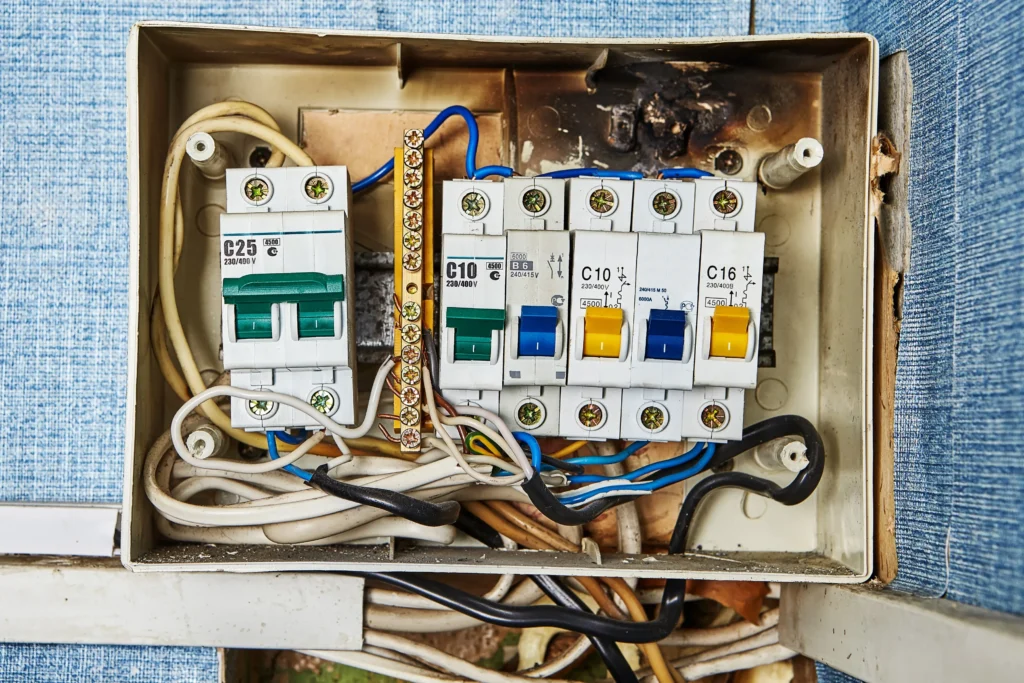
What it excludes: Crucially, a standard Electrical COC excludes specialized installations like electric fences, which fall under a different set of regulations.
2. The Electric Fence COC (The "Perimeter" Certificate)
Since 1 October 2012, a specific regulation (Regulation 12 of the Electrical Machinery Regulations) mandates that any property transfer involving an electric fence system must have a separate Electric Fence System Certificate of Compliance (EFSCOC).
Why is it separate? Electric fences are active security barriers that deliver a high-voltage shock. They pose different risks compared to a light switch. Consequently, the inspection criteria are stricter and focus on public safety.
What do we inspect?
Energizer Placement: Is the energizer installed in a compliant, fire-safe location?
Earthing: Does the fence have adequate earth spikes (separate from the house earthing)?
Warning Signs: Are visible warning signs placed at legally required intervals (usually every 10 meters) and at access points?
Vegetation: Is the fence line clear of trees and bushes that could cause false alarms or reduce the shock?
Do I Need Both?
If your property has an electric fence, the answer is yes.
While a qualified “Installation Electrician” can issue a house COC, they cannot necessarily issue an Electric Fence COC unless they are also registered as an “Electric Fence System Installer” with the Department of Labour.
This is where sellers often get stuck. They hire a general electrician who issues the house COC but cannot sign off on the fence. This forces the seller to scramble for a second contractor at the last minute.
The DP Inspections Advantage
Why hire two different companies? At DP Inspections, we are qualified to issue both certificates.
We inspect your distribution board and your perimeter security in a single visit. This saves you time, reduces administrative fees, and ensures that your entire property—from the kitchen lights to the boundary wall—is fully compliant and ready for sale.
Don’t let a missing certificate delay your transfer. Contact us today to book your combined Electrical and Electric Fence inspection.